 RubySquare
The 15-minute brain ritual
A daily routine that compounds into real board vision.
Why spatial puzzles outperform worksheets for kids' reasoning — and how to introduce Ruby Square without turning it into homework.
There's a version of 'educational screen time' that's really just a worksheet with animations. Kids smell it instantly. Ruby Square works for a simpler reason: it's a real game that happens to exercise the exact skills worksheets pretend to train.
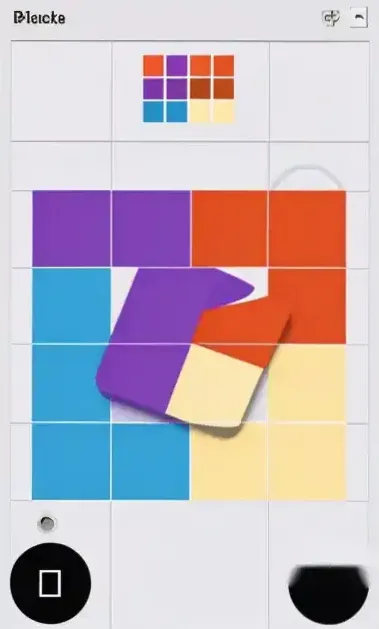
Strip away the colors and every Ruby Square level is the same problem: hold a target in memory, plan a sequence of transformations, evaluate the result. That's spatial reasoning, working memory and planning — the three capacities that predict math performance better than early arithmetic does.
Unlike worksheets, the feedback is immediate and honest. A wrong rotation isn't a red cross — it's a board state you now have to reason about. Kids learn that mistakes are information, not verdicts. That mindset transfer is worth more than the spatial skills.
Three principles from classrooms that work: never assign levels as homework (it dies instantly); always play alongside them sometimes (shared struggle beats supervised achievement); and celebrate process — 'that was clever planning' lands better than 'you're so smart'.
The moment a puzzle becomes an assignment, it stops being a puzzle. Keep it theirs.
The game is rated Everyone, Teacher Approved, fully offline, and collects almost nothing — the privacy policy is readable in four minutes. On the device-management front, the classroom license section of this site explains the ad-free school setup if you're deploying it beyond your own kids.
Target-in-memory + transformation planning = the spatial skills that predict math outcomes.
6–8s stay on 2x2 boards with you; 12+ gets the full game plus theory content.
Never assign it as homework — shared play and process praise keep the magic alive.
Education advisor & former teacher
Fiona spent eleven years in Perth classrooms before joining us to build the classroom license. She writes the lesson plans teachers actually use.